News
Apr. 10, 2026
Share:
The reason to build an FPV (First-Person View) drone, as opposed to a standard autonomous UAV, boils down to one core principle: unlocking a level of speed, agility, and immersive control that is impossible with traditional drones. They are built for a different purpose—prioritizing dynamic flight and human-machine synergy over automated stability and steady footage.
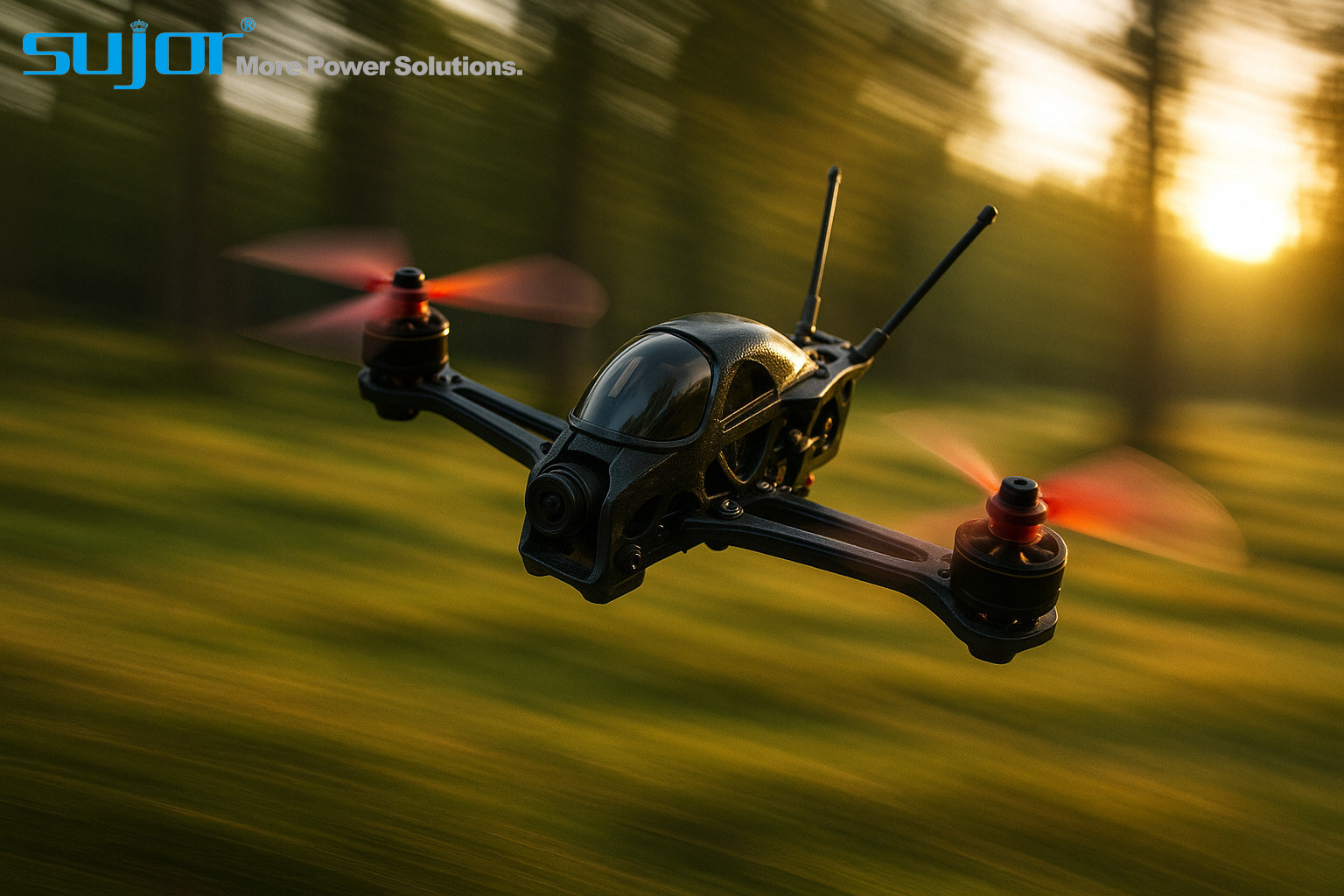
Here is a breakdown of the primary motivations for building and using FPV drones, ranging from high-octane sport to critical professional applications.
|
Domain |
Primary Motivation |
Key Applications & Examples |
|
Sport & Entertainment |
The pursuit of speed, agility, and immersive flying experience. |
FPV Racing through 3D obstacle courses; Freestyle flying for cinematic tricks in abandoned buildings or natural landscapes; general recreational "bird's-eye" flying. |
|
Professional Filmmaking |
Capturing dynamic, high-speed, and immersive aerial footage. |
Dynamic Action Shots for car commercials or sports documentaries; Aerial Cinematography requiring smooth, complex camera movements in tight spaces. |
|
Military & Defense |
Low-cost, highly agile solutions for modern warfare challenges. |
Precision Strike/Kamikaze Drones with anti-jamming tech (e.g., fiber-optic control); Rapid Reconnaissance in urban/forest environments; adaptable, modular systems for various missions. |
|
Industrial & Public Safety |
Accessing dangerous or confined spaces for inspection and rescue. |
Infrastructure Inspection (bridges, pipes) in complex structures; Search and Rescue in collapsed buildings or disaster zones |
⚙️ The "Why" Behind the Build: Key Drivers
Several fundamental design and performance characteristics explain why FPV drones are the preferred tool for the applications above.
Adaptability Through Modularity: FPV drones are rarely one-size-fits-all. They are often built from interchangeable components, allowing users to create a drone perfectly suited for a specific task. Companies like Draganfly have capitalized on this with systems like the Flex FPV, whose modular core allows operators to swap out arms and propellers in seconds to switch between reconnaissance and payload delivery missions
🚀 The Future: Smarter, Not Just Faster
The evolution of FPV drones is not just about bigger motors. A significant new frontier is intelligent software. Recent breakthroughs from researchers at Zhejiang University involve AI algorithms that can outperform veteran human pilots in aerobatic maneuvers.
This new "motion intelligence" gives drones the ability to autonomously execute complex flight paths through tight obstacles by balancing risk and reward in real-time. This development points to a future where FPV drones are not only manually piloted by experts but can also operate semi-autonomously for tasks like search and rescue in collapsed buildings or navigating cluttered industrial sites
💡 Tying It Back: FPV Drones as a Specialized UAS
From our previous discussion, you can see how FPV drones fit into the broader UAS (Unmanned Aircraft System) framework. The UAV is the agile, high-performance aircraft itself. The Ground Control Station (GCS) is the pilot's FPV goggles and radio transmitter, which are fundamentally different from the tablet used for a camera drone. The Communication Link is the critical video transmission system, which must have incredibly low latency for the pilot to react in time. In some modern military applications, this link is even replaced with a physical fiber-optic cable to create a jam-proof UAS, showcasing an extreme adaptation of the FPV concept.
conclusion
In summary, FPV drones are built to master the dynamics of flight in ways that autonomous systems cannot, offering a unique combination of human skill, machine agility, and expanding technological intelligence.
Related Products
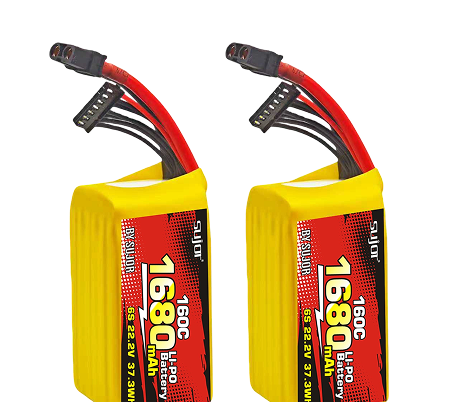
SUJOR aims to provide customers tailored lithium ion battery packs. We could not only provide customers with customized services for individual components such as battery cell, BMS and battery structure, but also offer optimal battery integrated solutions (cell+BMS+structure) based on customer’s detailed requirement.