News
Mar. 18, 2026
Share:
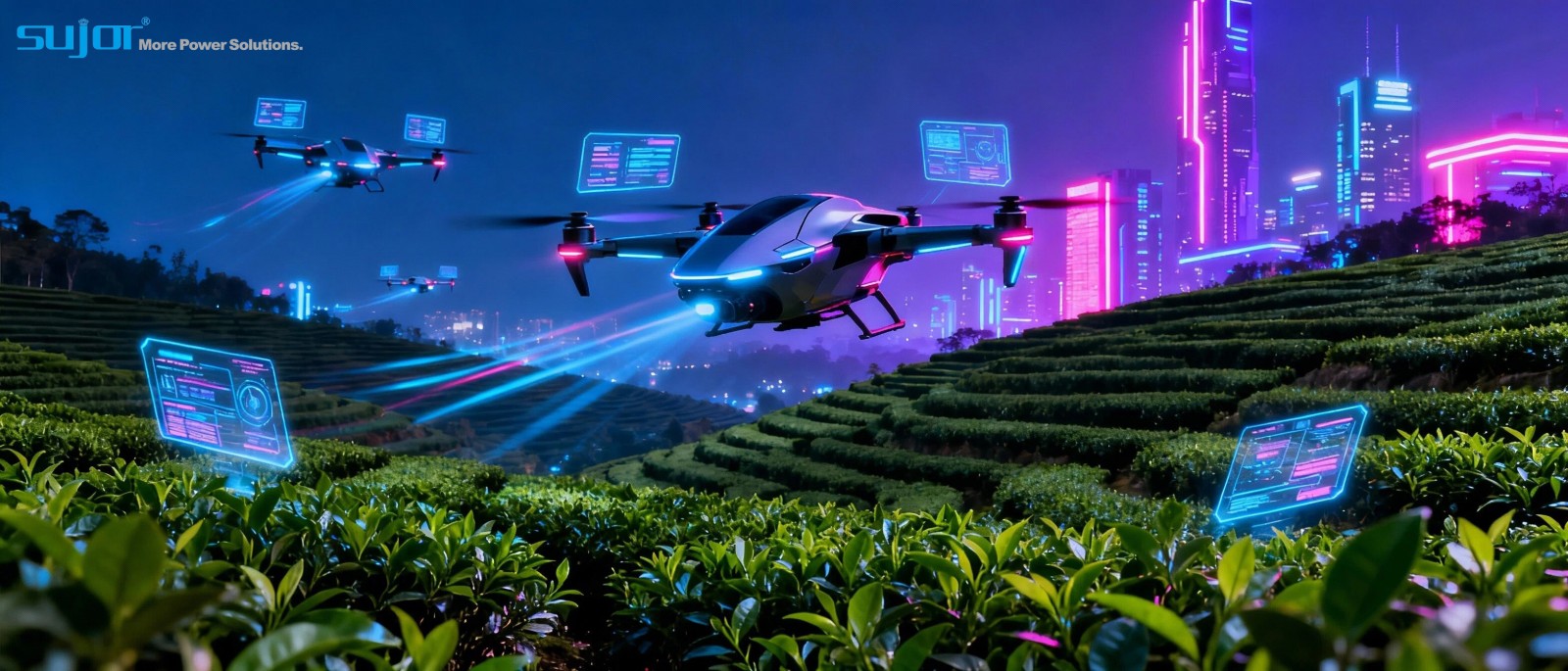
A research team led by Chen Zhongwei at the Dalian Institute of Chemical Physics, Chinese Academy of Sciences, has developed a high-specific-energy hydrogen-lithium hybrid power system, significantly enhancing the endurance and payload capacity of industrial drones.
This innovation addresses the key industry limitations of short flight time (typically 30-60 minutes for traditional lithium batteries) and performance degradation in extreme environments. The system synergistically combines a high-energy, ultra-low-temperature lithium battery with a hydrogen fuel cell, managed by an intelligent energy management system.
The lithium battery acts as a "sprinter," providing high instantaneous power (peak 20 kW) for takeoff and maneuvers, while the hydrogen fuel cell serves as a "marathon runner," delivering stable power (~5 kW) for extended cruising. This "dual-engine" approach enables continuous flight exceeding two hours, more than doubling the endurance of conventional solutions.
Core technological breakthroughs include:
An 8-micron ultrathin proton exchange membrane with self-humidifying capability, eliminating the need for external humidification.
A gradient-pore cathode structure to optimize airflow and prevent flooding/drying.
An "anti-freeze" electrolyte formula and modified anode materials (nano silicon-carbon composite) allowing stable operation from -50°C to 50°C. Capacity retention remains above 92% after 100 cycles at -40°C.
An adaptive thermal management system, limiting range loss to under 20% in extreme cold.
The system has proven effective in polar expeditions and field tests. It is now in the pilot-scale phase, accelerating towards commercialization. Potential applications span agriculture (e.g., crop monitoring), forestry (fire patrol), environmental monitoring, fisheries, and emergency logistics.
Supported by industry partnerships (e.g., Shanghai Xiba Technology Co., Ltd.), the team is building a full-chain ecosystem from materials to end-use scenarios. Production lines are under construction, targeting an annual capacity of 7,500 systems. The roadmap aims for mass production by 2026, specialized models for diverse environments (plateau, marine, high/low temperature) by 2028, and the establishment of industry standards by 2030, positioning this "Chinese power" solution as a green benchmark for the global low-altitude economy.
Related Products
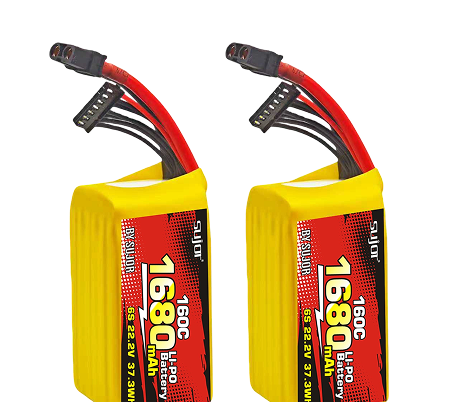
SUJOR aims to provide customers tailored lithium ion battery packs. We could not only provide customers with customized services for individual components such as battery cell, BMS and battery structure, but also offer optimal battery integrated solutions (cell+BMS+structure) based on customer’s detailed requirement.