News
Apr. 07, 2026
Share:
Drones have revolutionized numerous industries, from package delivery and infrastructure inspection to search-and-rescue operations and filmmaking. Yet, despite their technical prowess, the issue of noise remains a persistent barrier to their widespread adoption: traditional drones buzz loudly, like giant insects traversing the sky, disrupting tranquility and limiting their potential in sensitive environments. As technology advances, the development of silent drones has accelerated. Why is the demand for silence so urgent? How far are we from achieving truly "silent" drones? This article explores the noise challenges of standard drones, the technological innovations enabling quieter alternatives, and the compelling reasons why we urgently need silent drones.
What is the Noise Level of Drones?
The noise level of a drone refers to the sound pressure level generated during its operation, typically measured in decibels (dB). It is a critical metric for assessing environmental impact, regulatory compliance, and social acceptance.
Typical Noise Ranges (Consumer/Grade Drones)
|
Drone Category |
Noise Level (1-3 meters) |
Comparable Everyday Sound |
|
Small Camera Drones (e.g., DJI Mavic) |
70-80 dB |
Vacuum cleaner / busy traffic |
|
Professional Drones (e.g., DJI Matrice) |
80-90 dB |
Lawnmower / truck engine |
|
Racing/FPV Drones |
90-100+ dB |
Chainsaw / motorcycle at close range |
Note: Noise perception varies with frequency—high-pitched tones (common in drones) are more annoying than low-frequency sounds at the same dB level.
What are the Key Factors Influencing Drone Noise?
1.Rotor Design & RPM
Blade count, diameter, pitch, and rotational speed determine aerodynamic noise (vortex and blade-pass frequency).
2.Propulsion System
Brushless motor efficiency, ESC (Electronic Speed Controller) switching frequency, and mechanical vibrations.
3.Aerodynamics & Airframe
Streamlined designs reduce turbulent airflow; exposed components increase broadband noise.
4.Flight Mode & Altitude
· Hovering vs. high-speed flight alters noise profiles (e.g., dominant high-frequency tones vs. wind noise).
· Noise decays by ~6 dB per doubling of distance from the source.
5.Payload & Environment
Additional equipment (e.g., gimbals) disrupt airflow; ground reflection and atmospheric conditions affect sound propagation.
What are the Strategies for Noise Reduction?
1.Aerodynamic Optimization
oSerrated or biomimetic rotor blades (e.g., owl-inspired designs) to break up vortices.
2.Propulsion System Tweaks
oLower RPM with larger propellers, vibration-damping mounts, and optimized motor-phasing.
3.Active Noise Control (Experimental)
oAnti-phase sound cancellation via integrated speakers or modulated rotor thrust.
4.Operational Mitigation
oFlight path planning to avoid noise-sensitive areas, altitude restrictions, and time-of-day limits.
What is a Silent Drone?
A "silent drone" is not a completely noiseless drone—which is currently impossible due to the physics of moving air—but rather a drone engineered to operate at significantly reduced noise levels compared to conventional models. The goal is to make its acoustic signature far less intrusive, enabling broader social acceptance and new applications.
Do We Need Silent Drones? Why?
Silent drones are not merely a convenience; they are a critical technological evolution required to unlock the next frontier of drone integration into society, industry, and nature. The need stems from overcoming the fundamental limitation of conventional drone noise, which acts as a barrier across multiple dimensions.
Here is a breakdown of the compelling reasons why we need them:
1. Social Acceptance & Regulatory Approval
Noise Pollution Mitigation
The intrusive, high-pitched buzz of drones is a primary public nuisance. For drones to operate regularly in residential areas for deliveries, news gathering, or infrastructure checks, they must be socially acceptable. Lower noise directly correlates with higher public tolerance.
Urban Integration Enabler
Future applications like Urban Air Mobility (UAM) or "air taxis" will not be permitted in cities unless they meet stringent noise thresholds. Silence is a non-negotiable prerequisite for regulatory licenses.
2. Expansion of Sensitive Applications
Wildlife and Ecological Research
Noise scares animals, distorting behavioral studies and census counts. Silent drones allow non-invasive observation of species in their natural state, from bird colonies to marine mammals.
Cinematography and Live Events
For film, television, and sports broadcasting, capturing pristine ambient sound is paramount. A quiet drone allows for dynamic aerial shots without ruining audio takes or disturbing the atmosphere of a live concert or ceremony.
Security, Surveillance, and Defense
Stealth is a tactical advantage. A quieter drone is less detectable, making it far more effective for law enforcement operations, perimeter monitoring, and military intelligence, surveillance, and reconnaissance (ISR) missions.
Emergency Response
In disaster zones (e.g., earthquakes, fires), reducing noise pollution lessens psychological stress for victims and allows first responders to communicate more effectively amidst chaotic environments.
3. Enhanced Operational Effectiveness
Improved Pilot Situational Awareness
Loud drone noise can mask important auditory cues in the environment and create fatigue for the operator, especially over long missions. A quieter platform reduces this cognitive load.
Better Sensor Performance
For drones carrying sensitive acoustic sensors (e.g., for search-and-rescue, listening for distress calls, or environmental monitoring), their own noise is a form of self-interference. A quieter platform enhances the fidelity of the data collected.
4. Technological and Commercial Leadership
Driving Innovation
The pursuit of silence pushes advancements in aerodynamics, materials science, electric propulsion, and AI-driven flight control. These innovations have ripple effects across other sectors like aviation and robotics.
Creating New Markets
By solving the noise problem, entirely new commercial services become viable—imagine routine, unnoticed rooftop deliveries, discreet building inspections in dense urban cores, or peaceful aerial tours in national parks.
How far are we from "true" silence?
Near Term (Now - 5 years)
We have "quieter" drones achieving a ~10-15 dB reduction, shifting their sound profile from an annoying "buzz" to a more neutral "hum." This is sufficient for many of the sensitive applications listed above.
Medium Term (5-15 years)
For Urban Air Mobility, the target is operation below 65 dB during flyover (similar to background urban noise). Prototypes from companies like Volocopter and Joby Aviation are already demonstrating this.
"True" Silence (Indefinitely)
Physically impossible as long as drones generate thrust by moving air. The ultimate goal is not absolute silence, but acoustic invisibility—where the drone's sound is imperceptible against the ambient noise floor of its operating environment.
Conclusion
We need silent drones because their noise is the single greatest obstacle preventing drones from becoming a seamless, ubiquitous, and beneficial part of our daily lives and work. They are the key to moving beyond visual line-of-sight novelty tools to becoming integrated, essential utilities in our cities, industries, and ecosystems. The race to quiet the skies is fundamentally a race to realize the full potential of unmanned aviation. SUJOR, a professional manufacturer in UAV battery, is specialized in providing cutting-edge high energy density and fully customized battery packs. Let us work together to build perfect power solution for your unique application.
Related Products
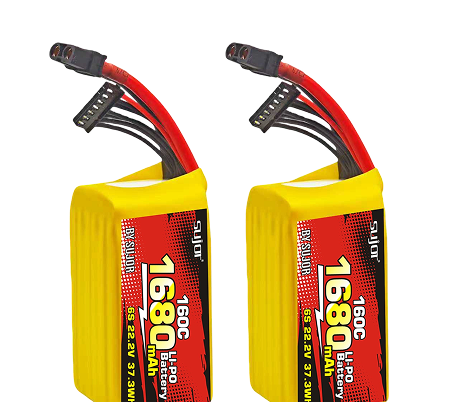
SUJOR aims to provide customers tailored lithium ion battery packs. We could not only provide customers with customized services for individual components such as battery cell, BMS and battery structure, but also offer optimal battery integrated solutions (cell+BMS+structure) based on customer’s detailed requirement.